Tuesday, August 30, 2011

UNHCR to provide final integration support at district level for the naturalized refugees from the Old Settlements

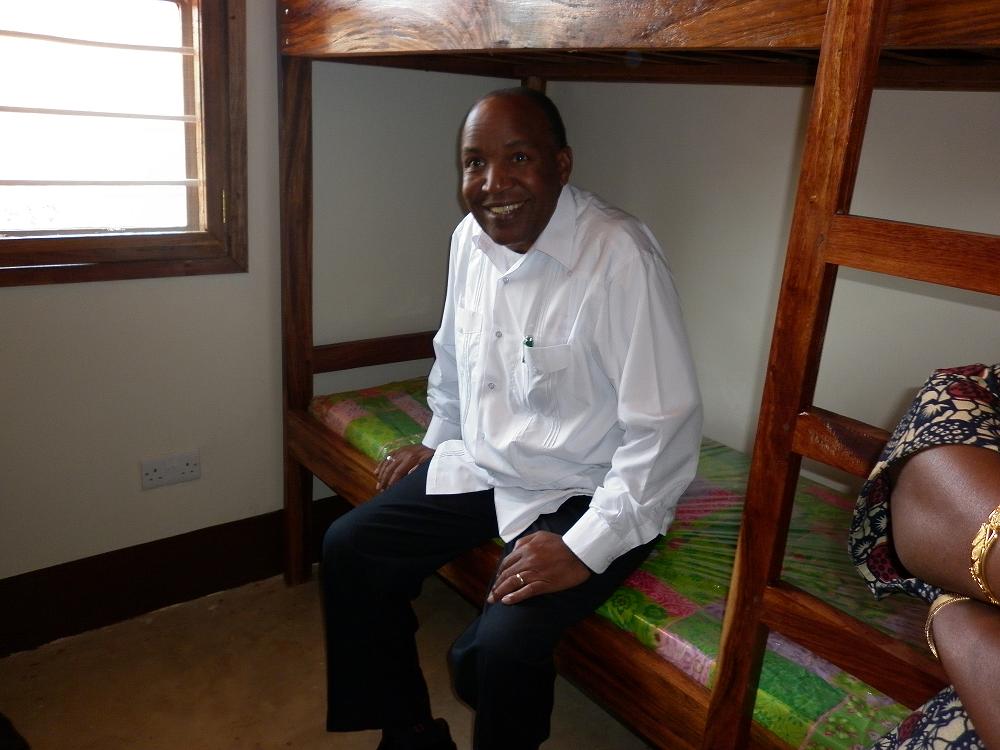
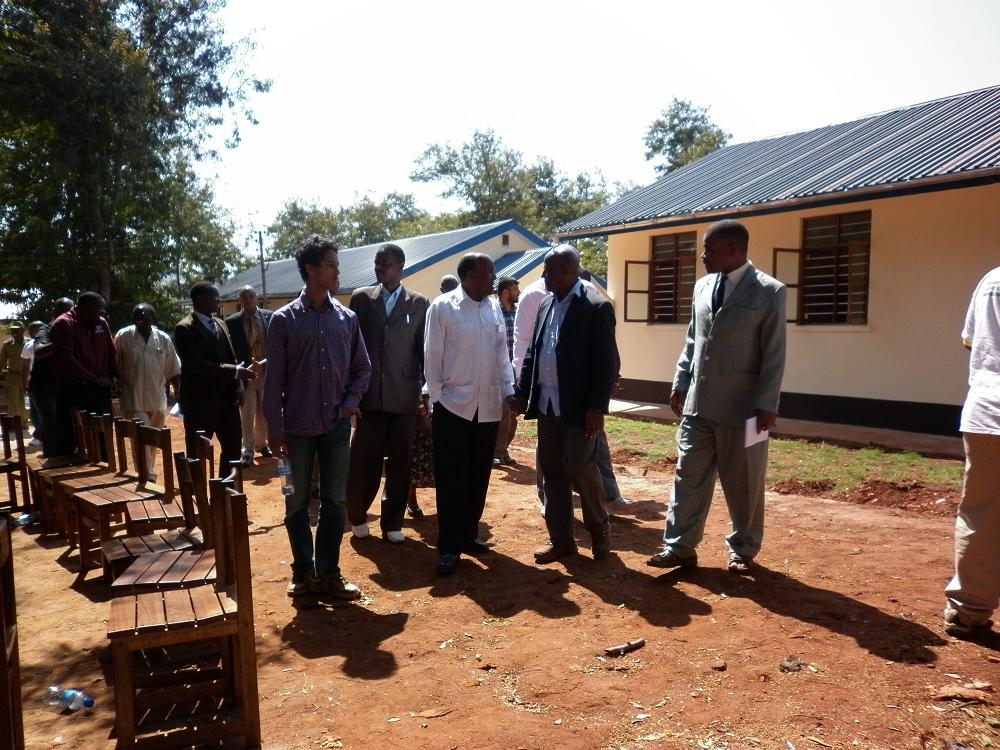
Dar es Salaam, 29th August 2011 (UNHCR) – During his four-day visit to Tanzania from 24 to 27 August 2011, UN Deputy High Commissioner for Refugees T. Alexander Aleinikoff met with various Government officials to discuss the state of the refugee operations in Tanzania.

Of special interest during these discussions was the relocation exercise for 162,000 former Burundian refugees currently settled in Rukwa and Tabora Region and the need to find durable solutions for the two remaining refugee camps in Northwestern Tanzania.
In discussions with the Prime Minister, Mr Mizengo Pinda, the UN Deputy High Commissioner for Refugees expressed his gratitude for the unprecedented humanitarian gesture of the Tanzanian Government to naturalize 162,000 former Burundian refugees.
“This is a historic contribution to regional stability”, said Aleinikoff after the meeting, “UNHCR and the international community will work with the Government of Tanzania to complete this exercise and locally integrate these naturalized individuals”.
He stated that UNHCR is ready to provide final integration support at district level for the naturalized refugees from the Old Settlements and seeks to engage development actors.

While the Prime Minister confirmed the commitment of the Tanzanian Government on the completion of the relocation and integration exercise, he also noted that the Government needs to hold further consultations on the way forward.
The UN Deputy High Commissioner for Refugees also met with the Minister of Home Affairs, Mr  Shamsi Vuai Nahodha, who stated that the Government is working on a lasting solution for this protracted refugee situation, reminding the international community to keep their promise to support the Local Integration Program.
With regards to the two remaining refugee camps in Northwestern Tanzania, Mr Nahodha reiterated the Government’s intention to close Mtabila camp for Burundian refugees by 31 December 2011.
Interviews with all 38,000 remaining refugees are to commence within the month of September in order to determine which individuals are still in need of international protection. The interviews will be conducted in a joint exercise by the Ministry of Home Affairs and UNHCR Tanzania.
Aleinikoff agreed that voluntary repatriation is the best solution for those Burundian refugees in Mtabila camp. However, he reminded the Government that any repatriation has to be conducted in a manner that is duly compliant with the standards and principles of international refugee protection.

As for the remaining 61,000 Congolese refugees in Nyarugusu camp, the general concern is to reassess the situation and conditions in the DRC after elections have taken place in November 2011. Meanwhile, repatriation will continue to be facilitated by the Ministry of Home Affairs and UNHCR for those individuals who are willing to return home voluntarily.
His four-day mission also gave the UN Deputy High Commissioner for Refugees the chance to meet with some donors, development partners and UN Heads of Agencies, and with selected law students from the University of Dar es Salaam who are engaged in an Advanced Course on Migration and Refugee Law.
Aleinikoff further paid a visit to some of the UNHCR operations in the field such as Mtabila camp in Kasulu Region and Ulyankulu Settlement in Tabora Region in order to interact with the people of concern to UNHCR and the UNHCR field staff.

Friday, August 5, 2011

Camps in east Ethiopia struggle to cope with influx of Somali refugees

Deep in the Ogaden desert – one of the most remote regions in Africa – a sprawling city of tents is emerging. More than 118,000 Somali refugees reside in the three camps run by UNHCR and the government in eastern Ethiopia's Dollo Ado district.
But the camps are struggling to cope with the continuing influx and the UN refugee agency is urgently constructing a fourth camp at Heloweyn to provide shelter for up to 40,000 people. Together with its partners, Médecins Sans Frontières and Save the Children, UNHCR will soon begin to transfer around 15,000 refugees to Heloweyn, some of whom have been waiting for up to one month in the transit centre at Dollo Ado.
About 1,000 kilometres from the capital, Addis Ababa, Dollo Ado lies close to the borders with troubled Somalia and Kenya, where some 400,000 Somalis have sought shelter in the crowded camps of Dadaab.
The refugees in Dollo Ado are being sheltered in three camps – Kobe, Malkadida and Bokolmanyo. Each was designed to accommodate 20,000 people, but the total in each camp is now almost double that.
The new arrivals, almost all of them women and children, are only too willing to tell of the appalling conditions that compelled them to flee and seek safety and succour far from their homes. Years of war have long forced people to flee Somalia, but this year a deadly drought has multiplied the exodus rate.
Barey, a heavily pregnant 31-year-old from the Bay region of southern Somalia, arrived here earlier this week with her five children. They arrived by truck, but did not have enough to pay for Barey's husband and he stayed behind to care for his blind father.
"For the past three years there has been no rain and our harvest has failed again," she explained. "In my village I owned 15 cattle and 100 goats. They all died because there was nothing for them to eat [or drink]."
Person after person staggering into Dollo Ado, many of them after walking for weeks, has a similar story of loss and suffering to tell. Without their livestock and water sources, rural folk from Somalia simply can't survive.
Conditions around Dollo Aldo give an idea of what the Somalis have had to cope with. Vegetation is sparse and sand blasts through the arid terrain. In these conditions, UNHCR teams are delivering shelter, food, water and health services to the displaced. Further aid is on its way, including tents, medical supplies and equipment to drill water wells.
Meanwhile, UNHCR is concerned about fresh violence between government forces and the opposition Al-Shabaab militia, which is also triggering flight in south and central Somalia.
The continuing insecurity makes the journey out of the country more perilous. Forced to move at night through bush areas, some refugees are travelling hundreds of extra kilometres in order to escape notice. Men and teenage boys are at risk of recruitment.
For now, Barey is relieved to have reached safety: "I came to Ethiopia hoping for a better life for my children. But if the rains come and peace returns to Somalia, I want to go back to my country."

Thursday, August 4, 2011

UN: Somali Refugees Top 860,000


The United Nations says the number of Somali refugees in the Horn of Africa has topped 860,000, many of them forced out by the ongoing drought and famine.
The U.N. refugee agency says another 1.5 million Somalis are internally displaced, mostly in Somalia's south-central region.
A report issued Wednesday says many Somalis fled their homes after the last of their livestock died, depriving them of income and food.
The agency says that since January, 125,000 Somalis have fled to Kenya, and another 76,000 to Ethiopia. Earlier Somali refugees were largely forced out by fighting between government forces and insurgents.
Somalia is at the center of the worst drought to hit the Horn of Africa in 60 years. The United Nations says more than 12 million people in the region are in need of food aid.
The U.N. recently declared a famine in two parts of southern Somalia, and has warned that famine conditions are likely to spread to other areas in the next four to eight weeks.
On Tuesday, British relief agency Oxfam said governments and donors need to fulfill their pledges of aid more quickly. 
The U.N. refugee agency says large numbers of Somali children are malnourished, and the under-five mortality rate at refugee camps in Kenya is on the rise.
FACT FILE
• The word famine is a term that is not used lightly by humanitarian organizations. The United Nations describes a crisis as a famine only when the following conditions are met:
• Malnutrition rates exceed 30 percent
• More than two people per 10,000 people are dying each day
• Severe lack of food access for large population
• Almost half of Somalia's population, 3.7 million people, are affected by the current crisis with malnutrition rates in southern Somalia the highest in the world, surpassing 50 percent in some areas.
• The United Nations says it is likely that tens of thousands have already have died, the majority of those being children.
• The drought that has led to the current famine in parts of Somalia has also affected people in Kenya and Ethiopia.
Previous Famines in the Horn of Africa:
• Somalia 1991-1992
• Ethiopia 1984-1985
• Ethiopia 1974

Wednesday, August 3, 2011

East Africa: UNICEF urges airlines to cut costs of delivering aid

As aid agencies continue to scale up their response to the dire humanitarian situation in the Horn of Africa, the United Nations Children's Fund (UNICEF) is appealing to the air transport sector to provide free and discounted cargo space to bring emergency food supplies into the region.
"Commercial air transport costs as much as the value of the food," Marixie Mercado, UNICEF's spokesperson in Geneva, told a news conference there.
British Airways, Lufthansa, UPS Virgin and Cargolux have already offered free or discounted cargo space, and UNICEF is appealing to other carriers to help transport food aid from Europe to the region to help children who will die without it.
Drought in the Horn of Africa has ravaged large areas of Somalia, Kenya, Ethiopia and Djibouti, leaving an estimated 12.4 million people in need of humanitarian aid.
UN agencies and their partners are seeking $1.4 billion so they can scale up their response to the hunger crisis, which has already claimed tens of thousands of lives.
Yesterday UN humanitarian chief Valerie Amos warned that the famine in two areas of southern Somalia could spread to five or six more regions unless there is a massive increase in funding.
Ms. Mercado stated that more than half of the 2.3 million acutely malnourished children in the Horn of Africa could die unless they are fed within weeks.
Every month, UNICEF had about 5,000 tons of therapeutic and supplementary food to move from warehouses in Belgium, France and Italy - enough to feed 300,000 malnourished children.
This food has to be brought into Nairobi as quickly as possible, and bringing it by air is extremely costly, she noted. The other alternative is to transport the food via sea, for which UNICEF is setting up a pipeline, but that would take several more weeks.
The Office of the UN High Commissioner for Refugees (UNHCR) said today that its ability to deliver much-needed aid is being hampered by the ongoing fighting in the Somali capital, Mogadishu.
There were already more than 370,000 internally displaced persons (IDPs) in Mogadishu before the recent drought- and famine-related displacement, which has driven some 100,000 others into the war-ravaged city, according to the agency.
"The ongoing offensive is negatively affecting the ability of UNHCR and other partners to deliver assistance to populations in distress at a time when their needs are most urgent," said UNHCR spokesperson Fatoumata Lejeune-Kaba. "We need to maintain access to these people."
Meanwhile, the flow of refugees from Somalia into Kenya continues unabated, with more than 40,000 Somalis arriving in the Dadaab refugee complex - already the largest and most congested in the world - in July. This is the highest monthly arrival rate in the camp's 20-year history, UNHCR said.
The UN Food and Agriculture Organization (FAO) said it is continuing to work in areas affected by the hunger crisis, especially in Somalia where other agencies had severe access problems. The agency is trying to provide cash-for-work programmes, helping famine-hit farmers and herders in Somalia to feed their families.
FAO is following this up with the distribution of seeds and tools, water trucking, vaccination and treatment of animals, meaning that households could quickly resume their farming and livelihoods production in time for the coming rains in September and October, spokesperson Sandra Aviles told reporters.
She also warned that the existence of large displaced populations was placing an enormous strain on the host communities in Kenya and Ethiopia, along with the natural resources of the surrounding areas, and could lead to tension over access to vital resources.

EU and UNHCR visit to refugees in Tanzania

From 27 to 29 July, a delegation of Ambassadors to Burundi and Tanzania of the European Union, Stefan de Loecker and Tim Clarke, visited the refugee operations with UNHCR representatives.
The objective was to assess the situation of the remaining 100,000 individuals who have been living in camps in Kigoma region since 1993 and of the more than 162,000 former Burundian refugees who were granted citizenship by the Tanzanian government and are living in three settlements in Rukwa and Tabora regions since 1972.
In May, the Tripartite Commission between the governments of Tanzania and Burundi, together with UNHCR agreed to close Mtabila camp for Burundian refugees by 31 December 2011. The EU will support UNHCR and its partners to facilitate the voluntary repatriation and the gradual integration of these refugees in their country of origin.
As a result of the mission the EU and UNHCR will work at in particular how to provide suitable conditions in Burundi to promote the repatriation process. As regards the Nyarugusu camp, the delegation noted the concerns expressed by the Congolese refugees about the security conditions in their country and notably the challenges faced by the forthcoming elections.

Mission members were encouraged by recent discussions initiated by the Government of Tanzania regarding the continuation of facilitation of voluntary repatriation to the DRC.
On their visit to the Ulyankulu settlement in Tabora region, the delegation recognized the unprecedented decision of the Tanzanian government to naturalize those refugees who arrived in Tanzania in 1972 and commended this gesture of generosity as exemplary in finding durable solutions for protracted refugee situations.
The naturalized refugees are expected to relocate into 16 selected regions of Tanzania. This exercise will be led by the Prime Minister’s Office – Regional Administration and Local Government (PMO-RALG) with the support of UNHCR and other UN agencies.
While hearing the concerns of the community and ensuring they would have access to appropriate health and education facilities, the EU Ambassador to Tanzania, Tim Clarke, said “Tanzania is at a crossroads in how to deal with refugees, many of whom have been hosted by the Government for four decades. All parties want to make the naturalisation and the relocation process a real success – a win-win for all, but no one should underestimate the challenges ahead.”

“We are waiting for the Government decision on when to start the relocation. UNHCR gave assurances that will closely follow and monitor your integration into the country with the support of our partners,” assured the UNHCR Representative to Tanzania, Oluseyi Bajulaiye, to the newly naturalized Tanzanians.
“Thanks to our donors, we will enhance the social services in the receiving regions to make sure that the local communities will also benefit from your presence”, he added.
Other members of the delegation were the EU Head of the Political Section to Tanzania, Tom Vens, the ECHO team in Burundi, Isabelle D’Haudt and Alexis Mangona, the UNHCR Deputy Representative to Burundi, Barry Abdoulaye, the UNHCR Head of Makamba office in Burundi, Wella Kouyou, and the UNHCR Associate External Relations Officer to Tanzania, Jerome Seregni.
The Government of Tanzania was represented by Deusdedit Masusu, from the Ministry of Home Affairs and Swahiba Mndeme, from the Ministry of Foreign Affairs.

Thursday, July 28, 2011

UNHCR marks 60th anniversary of Refugee Convention

GENEVA, 28 July 2011 – The Geneva Refugee Convention marks its 60th anniversary today as forced displacement becomes increasingly complex and as developing countries struggle to host the large majority of the world's refugees.
The UN Convention Relating to the Status of Refugees was formally adopted on July 28, 1951 to resolve the refugee problem in Europe after World War II.
This global treaty provides a definition of who qualifies as a refugee – a person with a well-founded fear of being persecuted for reasons of race, religion, nationality, membership of a particular social group or political opinion – and spells out the rights and obligations between host countries and refugees.
As the legal foundation on which UNHCR's work is based, it has enabled the agency to help millions of uprooted people to restart their lives in the last 60 years.
Today, the Convention remains the cornerstone of refugee protection. It has adapted and endured through six decades of massive changes but it faces unprecedented challenges today.
"The causes of forced displacement are multiplying," said UN High Commissioner for Refugees António Guterres.
"People are uprooted not just by conflict and persecution, but also by extreme poverty and the impact of climate change. These factors are increasingly inter-related."
In Somalia, over 170,000 people have fled into neighbouring countries since January, citing famine, drought and insecurity as reasons for leaving. Up to 1 million others have left embattled Libya, among them refugees and asylum-seekers, but also economic migrants seeking a better life elsewhere.
"We need protection-sensitive borders so those in fear for their lives or freedom continue to find it," said Guterres.
"At the same time we need to find innovative ways to fill the increasingly clear gaps in the international protection system and to promote the values of tolerance and inclusion rather than fear and suspicion."
Four-fifths of the world's refugees live in developing countries, and the recent crises in Somalia, Libya and Côte d'Ivoire have added to this burden.

As East Africa struggles to cope with the worst drought in 60 years, Kenya, Ethiopia and Djibouti are hosting nearly 450,000 Somali refugees – and the numbers are growing daily.
Tunisia and Egypt have received the bulk of the exodus from Libya amid the turbulence of the Arab spring. Barely recovering from years of civil conflict, Liberia provides refuge to over 150,000 Ivoirians who fled post-election violence and a still-uncertain situation in their home country.
By comparison, the 27 countries of the European Union together received just over 243,000 asylum applications last year, or about 29 per cent of the total worldwide.
Europe owes it to these people, to all refugees, and to itself to uphold the values of the 1951 Refugee Convention," said the High Commissioner, noting that the EU has the capacity to enlarge its share of responsibility for refugees and asylum-seekers.
"At present, a truly common system remains elusive, as significant differences persist among Member States in their reception and treatment of asylum-seekers.
The 60th anniversary of the Refugee Convention, we hope, will give impetus to the establishment of a true Common European Asylum System. Europe could also do more to resettle refugees," said Guterres, referring to the process through which refugees in one country, usually in the developing world, are permanently relocated to new countries, usually in the developed world.

Denmark was the first state to ratify the 1951 Convention. Sixty years on, 148 states (three-quarters of the world's nations) are parties to the Convention and/or its 1967 Protocol.
Nauru is the most recent, having joined in June this year. But there are still parts of the world – most notably South and South-East Asia and the Middle East – where the majority of states have yet to ratify the Convention.
In December, the UN refugee agency will convene a ministerial meeting of States Parties to the 1951 Convention.
States will be able to reaffirm their commitment to the Convention as the key instrument of refugee protection and pledge concrete actions to resolve refugee and statelessness problems. The meeting will also seek ways forward on protection gaps in the fast-changing environment of forced displacement.
UNHCR believes that even one person forced to flee war or persecution, is one too many. To mark the 60th anniversary of the Convention, the agency has launched the "1" campaign, which aims to humanize an issue often reduced to numbers by telling stories of individual refugees and other forcibly displaced people.

Wednesday, July 27, 2011

Tens of thousands of drought-displaced Somalis head to Mogadishu


NAIROBI, Kenya, July 26 (UNHCR) – Tens of thousands of Somalis have converged on Mogadishu in recent weeks in search of food, water, shelter and other assistance and about 1,000 are now arriving every day.
They are escaping from drought and famine in their home areas in south and central Somalia, which is already plagued by conflict. Over the past month, UNHCR figures show that nearly 40,000 Somalis have headed to Mogadishu while a further 30,000 have arrived at settlements 50 kilometres from the capital.
On Monday, senior UNHCR staff visited internally displaced people (IDPs) in Badbado, which is one of the biggest settlements in Mogadishu with an estimated 28,000 people, or about 5,000 families. More are arriving every day. Others are being relocated by the municipal authorities from settlements within the city centre.
"Our colleagues got a first-hand view of the desperation of hungry, displaced people as they jostled for food being distributed by local charities," a UNHCR spokesperson said.
"Given the growing numbers of displaced people in search of food assistance, the amounts being delivered are not sufficient to meet all of the needs."
This has caused serious crowd crushes and even some looting. As a result, some of the weakest and most vulnerable people are left with nothing, despite the best efforts of agencies and charities.
One woman who had travelled for travelled for 11 days from the famine-affected Bakool region told the UNHCR visitors that she was forced to beg to provide for her family of five children and needed assistance.


An elderly man said he had fled from his native Lower Shabelle region, also declared famine-affected, after all his cattle died. The man said he was unable to push his way through the crowds during aid distributions, so was often left without food donated by a charity and organized by local business people.
To address the concerns and needs, UNHCR will begin distribution of 4,000 assistance packages for 24,000 people in the coming week. This includes jerry cans, buckets, pots, plates, bowls, cups and other utensils so that they can carry the food and water they receive.
The refugee agency has also provided a large marquee so that a health centre can be established in Badbado.
So far this year, inside south-central Somalia, UNHCR has distributed more than 17,000 emergency assistance packages benefiting 102,000 people. In the coming days, a further 19,000 packages containing essential items for 114,000 people will be distributed.
Another 40,000 packages containing high-energy biscuits, oral re-hydration solution and water purification tablets, are being procured by UNHCR and will reach an estimated 240,000 people.
In north-east Kenya, meanwhile, UNHCR on Monday began to relocate Somali refugees living on the outskirts of the crowded Dadaab refugee camps to a new site known as the Ifo Extension.
More than 500 family tents were erected to accommodate at least 2,500 people. Some families have already moved in. A second site, known as Kambioos, will also open in the next few days.
The Dadaab camps have been receiving an average of 1,300 new refugees daily, fleeing conflict, drought, famine and insecurity in Somalia. The Somali refugees are arriving in an appalling state of health, dehydrated and severely malnourished, especially children.
Most of the new arrivals settle on land fringing the three existing Dadaab camps – Dagahaley, Ifo and Hagadera. The Ifo outskirts currently have some 35,000 Somalis living rough.
This creates strain on the fragile semi-arid environment, stokes tensions with the local communities and raises the risk of fire or the outbreak of diseases. The area is also prone to flooding in the rainy season.
On July 14, the Kenyan government announced that a long-planned extension of the Ifo camp could open, helping to decongest Dadaab. Pending the full opening of this extension, UNHCR is helping refugee families who had previously begun moving to the new site on their own.

In Ethiopia, the overall nutrition situation in the remote Dollo Ado camps near the Somali border remains a concern. Malnutrition levels among new arrivals are high.
At present, approximately 30 per cent of children under five in the transit centre and Dollo Ado's Kobe camp are under treatment for severe malnutrition. In Malkadida camp, 33 per cent of children under five are under treatment for acute malnutrition, compared to 22 per cent in Bokolmanyo, the third camp.
UNHCR and its partners are addressing the situation. Save the Children (USA) has started twice-daily supplementary feeding at the transit centre for all children under five, many of them severely weakened by hunger and the long walk from Somalia. In addition, all refugees waiting to be registered and transferred to the refugee camps are receiving two hot meals a day.
As of Friday, there were 114,646 Somalis in the Dollo Ado area camps. This is in addition to another 41,000 in the Jijiga area. Arrival numbers have dropped to several hundred a day from 2,000 daily a month ago. Kobe camp, which opened in June, is now full with more than 25,000 people. A new camp, Hilaweyn, for up to 60,000 is nearing completion.

Tuesday, July 19, 2011

World's top asylum spot South Africa plans crackdown


JOHANNESBURG — South Africa has set the stage for the mass deportation of more than one million Zimbabwean immigrants later this month in a move that could alter its status as the world's largest country of refuge.
South Africa has been a beacon for asylum seekers due to its liberal immigration laws, proximity to African trouble spots and massive economy compared to the rest of the continent that has attracted millions seeking wealth they cannot find at home.
About one in five of the 845,800 asylum seekers globally in 2010 sought refuge in South Africa, according to the U.N. High Commissioner for Refugees.
That is nearly double the combined figure for the United States and France, the world's number two and three countries in terms of asylum applications.

The bulk of asylum seekers are from neighboring Zimbabwe, which has become an economic basket case under its entrenched leader Robert Mugabe, whose ZANU-PF party has been charged by global powers with using violence and vote fraud to stay in power.
The government said the crackdown on the Zimbabweans is a signal it wants to get tough on those who use asylum applications to seek work and money.
"Following this project, our intention is to document nationals of other neighboring countries," said Home Affairs spokesman Ronnie Mamoepa.
South Africa allowed hundreds of thousands from Zimbabwe to enter without documents about two years ago when its neighbor was swept up in political violence and its already unsteady economy collapsed under the weight of hyperinflation.
It set an end of 2010 deadline for the Zimbabweans to apply for proper visas -- with 275,000 filling out paperwork -- and said when July ends, it will start deporting what analysts estimate could be one to two million other Zimbabweans without proper documents.
BOTTLENECKS
With few staff and a flood of applicants, it can take Home Affairs months or even years to process applications, allowing immigrants to stay long enough to earn mostly modest sums of money to help their families back home.
"As long as regional economic inequalities remain so stark, South Africa will continue to be a primary (if temporary) destination," said Loren Landau, director of the African Center for Migration and Society at the University the Witwatersrand.
The only problem is that those legitimately seeking political asylum face an uncertain future, waiting longer in South Africa for a decision than in many other countries.
A concern for South Africa is that not only are the number of asylum seekers from neighboring countries growing, but so are the numbers from further afield African states including Somalia, Ethiopia and the Democratic Republic of the Congo.

With unemployment at 25 percent, the government has faced criticism from its poor for allowing immigrants into South Africa, where they compete for scarce jobs and space in shantytowns that have mushroomed in major cities.
Tensions flared about two years ago when attacks on migrants left at least 62 dead and more than 100,000 homeless, rattling the nerves of the government and investors.
The refugees strain public services but many also take on jobs for which there are not enough skilled South Africans, or perform work that South Africans do not want to do.
"I would say that the net result is that the benefit equates to or surpasses the burden," said James Chapman, a refugee attorney at the University of Cape Town Law Clinic.
The government, concerned about the influx, is planning to tighten its borders and expel those who stay illegally.
"The issue here is not about too many asylum seekers, per se. Rather it's about a migration management regime that is ill-suited to South Africa's regional position," Landau said.
SOURCE: REUTERS AFRICA

Ewan McGregor speaks up for starving children in East Africa


UNICEF ambassador Ewan McGregor has made a heartfelt plea for the victims of what has been called the worst food crisis of this century in East Africa.
“East Africa is in crisis – war, failing harvest and the worst draught in fifty years means that over 2 million children are at risk… risk of disease, risk of death,” says the actor and humanitarian in a new video filmed for UNICEF.
“At just one refugee camp in Kenya, there are almost half a million people in urgent need of food, water and basic healthcare. The situation throughout the region is becoming more and more critical. The threat of starvation is very real.
“By giving just £5, you could give desperately needed food to the most malnourished children. UNICEF’s most experienced teams are already on the ground, ensuring lifesaving aid is getting through, but we urgently need your help to reach every child who needs us. I promise your donation will make a real difference.”
The epicenter of the drought has hit the poorest people in the region in an area straddling the borders of Kenya, Ethiopia and Somalia where families rely heavily on livestock for survival.
In some parts of the region, up to 60 percent of their herds have already died while the remainder is either sick or dangerously underweight. The price of animals has plummeted by half while the cost of cereals has soared. In Somalia the price of a main staple sorghum has risen by a massive 240 percent since this time last year.

Malnutrition rates in parts of Ethiopia, Kenya and Somalia are alarming and well above emergency levels – in some places five times higher than crisis threshold. In Dolo Ado, a camp in southern Ethiopia for Somali refugees, malnutrition rates are the highest recorded in this region since the nineties.
Last week, Kristin Davis visited the Dadaab refugee camp in Kenya with Oxfam, saying “I met women who have walked for 20 days through the desert, with children dying on the way, only to arrive at a camp where there is hardly any food and water to go around.
We must not allow this to happen in this day and age. Anything that you can give will help people who have absolutely nothing.”
Earlier this month, stars such as Annie Lennox, Peter Gabriel and Lauren Laverne signed an open letter to raise awareness of the humanitarian disaster: “While severe drought has undoubtedly led to the huge scale of the disaster, this crisis has been caused by people and policies as much as nature.
The global food system is clearly not working. Five of the past seven years have seen poor or failed rains across the region – if action had been taken earlier it could have helped mitigate the severity of the current crisis.
Pastoralists’ ability to cope with drought has been systematically undermined, as land traditionally used in times of emergency has been sold off or allocated for tourism, national parks and large-scale agriculture.”

Wednesday, July 13, 2011

Inauguration of the extension of Mpanda Girls Secondary School

The Regional Commissioner, Mr Daniel Ole Njolai inaugurated the extension of the Mpanda Girls Secondary School on Saturday July 9, 2011 in Mpanda District, Rukwa Region.
The extension project was funded by the Japanese Government through UNHCR with aim of contributing to a conducive learning environment at the school as well as a way to thank host community for their generosity in hosting the Newly Naturalised Tanzanian formerly Burundian refugees from the ‘Old Settlements’  Katumba and Mishamo.  
Japanese assistance to Mpanda Girls Secondary School is funded through a scheme within the supplementary budget of the Japanese financial year 2010/2011 for Humanitarian Assistance for African Countries.
A total of 30 billion Japanese Yen (equivalent to approximately 0.37 billion USD or 588bn/-) was provided to 31 sub-Saharan countries through various international organizations.
Within this scheme, the Japanese Government has provided 3 million USD for the UNHCR Tanzania refugee operations for the year 2011.
Speaking at the ceremony the Regional Commissioner of Rukwa Region who was the Guest of Honour expressed his gratitude to UNHCR for improving the outlook of this remarkable school and added that it is through such efforts that the student will be comfortable in learning process and will also increase their moralities of studying since the environment are conducive.
He also advised the   student and the teachers to build the culture of maintaining the dormitories in order to allow other generation to use the dormitories.
“On behalf of the government, we are so happy for the rehabilitation of Mpanda Girls Secondary School, Thanks to UNHCR for its support since they came in Mpanda. Hopefully the students will use the dormitories effectively in order to allow other generation to benefit.
 “The government is putting more efforts to education in order to have different scholars who will continue building the nation. It’s better to invest in education rather than other things which are unnecessary,” he said.
UNHCR Head of Office in Mpanda Mr Mamo Mulusew shared the aim for the UN Refugee Agency to engage in rehabilitation of Mpanda Girls Secondary School as he indicated that “The support of UNHCR and the international community to projects like this has a big support to the community and the school as well.
Mpanda Girls Secondary School project is one of the several projects that UNHCR had the pleasure of taking part in mobilising funds for, selection of implementing partners and the monitoring of the execution of its components”.
In relation to that he, expressed his appreciation to REDESO – the NGO responsible for the direct implementation of the project. He said Mpanda Girls Secondary School rehabilitation is the 2nd project that REDESO completed within the past 12 months, the other one being the Urwira dispensary in Mpanda.
He finalised by assuring the government that UNHCR will continue to support the local administration in the upcoming process of reintegration of the recently naturalised refugee population within Tanzanian communities. The process of the selection and implementation of community support programs will always be done in cooperation with the authorities in the region.
In his remarks at the ceremony, the Project Manager REDESO, Mr Dickson Maiga informed the public   that the construction   and rehabilitation of the school was in four phases. One phase is finished and it cost 441,498,958/-. Other phases will start soon.

Tuesday, July 12, 2011

Kenya refuses to open empty refugee camp as thousands flee famine


Starving refugees fleeing East Africa's drought are being barred from a refugee centre which Kenya's government refuses to open due to security fears.
New water tanks, lavatory blocks and health care facilities stand idle at the camp while tens of thousands of desperate people are forced to shelter nearby in what Oxfam today called "shocking conditions".
The extra space was built to take the overspill from Kenya's Dadaab refugee camp, which was overwhelmed even before the effects of the current hit crisis levels.
Dadaab's three existing centres were designed to house 90,000 people mostly fleeing war and drought in neighbouring Somalia.
Today, they are swamped with more than 380,000, and 1,400 more people are arriving each day.
Kenya's government approved the construction of the new Ifo II camp two years ago but has since blocked access for fear that refugees will settle there permanently.
Joost van de Lest, the head of Oxfam in Kenya, said that while Kenya should be commended for hosting Somalia's refugees for more than a decade, it was imperative that new arrivals now be allowed access to the ready-made camp.
"It is tragic that vulnerable families are trapped in limbo, forced to endure appalling conditions while there are fully functioning services right next door," he said.
"Women and children have walked for weeks through the desert, braving hunger and attacks by armed robbers and wild animals, to get to the camps in Kenya.
"They arrive extremely weak and malnourished, and the least that we can do is ensure that there is water, food and care for them when they get here."
The UN's refugee agency UNHCR has for two years been calling on the Kenyan government to open the new facilities.
Antonio Guterres, head of UNHCR, said today that the drought now affecting more than 11 million people in Kenya, Somalia and Ethiopia was "the worst humanitarian crisis in the world today".


Three times more children are dying at Dadaab's other camps than a year ago, Mr Guterres said after a visit there at the weekend.
Ethiopia today revised estimates of the number of its citizens needing urgent food, water and medicines to 4.5 million, 40 per cent more than earlier calculated.
Separately, the anti-poverty campaign group ONE, founded by Bono, the Irish rock star, said that £13.7 billion of pledges made by G8 leaders in 2009 to help prepare people for future droughts were less than a fifth funded.
"We should not need a food crisis to wake us up to the need to not just give food aid now, but also deliver on the promised partnership with African leaders, citizens and the private sector to boost [agricultural] yields across the region," said Jamie Drummond, the group's executive director.
Britain has handed over just 30 per cent of the £1.1 billion it promised for schemes that would have helped protect people from the current food crisis, he added.
SOURCE: The Telegraph

Wednesday, July 6, 2011

What you need to know about refugees in Tanzania

      
The United Republic of Tanzania's history as a country of asylum dates back more than 40 years, over which period it has hosted one of the largest refugee populations in Africa.
The Government of Tanzania has also been active in the search for solutions for refugees within its territory; for instance, it has played a key role in international efforts to bring peace and stability to Burundi and to the Democratic Republic of the Congo (DRC).
In April 2010, the Government took the unprecedented decision to naturalize more than 162,200 Burundian refugees who had lived in so-called "Old Settlements" in the north-west of the country since 1972.


In a troubled region, Tanzania has remained peaceful and stable while most of its neighbours have suffered civil conflicts. The elections in Tanzania and Burundi in 2010, which have brought refugee issues under increasing scrutiny, could have an impact on UNHCR's work.

It is the Government's wish that voluntary repatriation and other solutions bring an end to the refugee situation in the country. Tanzania continues to enforce an encampment policy which requires all refugees to live in "designated areas." This leaves the refugees few opportunities to supplement their incomes and diets, and they remain dependent on humanitarian assistance.


United Nations High Commissioner for Refugees (UNHCR) has continued to promote and facilitate the voluntary repatriation of Burundian and Congolese refugees in north-western Tanzania.
However, the pace of repatriation remains slow because of fears of violence related to election and land issues in Burundi, and to insecure conditions in the eastern DRC. As a consequence, resettlement will continue to play an important role as a durable solution for this group.


Meanwhile, UNHCR aims to maintain high standards in the provision of food, nutrition, water and health care, while also implementing measures to prevent and respond to sexual and gender-based violence.

The Government will continue to need UNHCR's help to complete the local integration of the newly-naturalized former Burundian refugees, and assist them to relocate to the areas in which they will live.

Despite their naturalization, the members of this group remain of concern to UNHCR as they will not be able to exercise all their rights as citizens until their local integration is finalized.
Another group of Burundian refugees of the 1972 group, who settled in villages in the Kigoma region, will be offered opportunities for durable solutions, including naturalization.
The registration of this group, comprising some 22,000 people, is underway, and individual preferences for repatriation to Burundi or naturalization and integration in Tanzania, are being recorded.

Other refugees, mainly ethnic Hutus, who arrived from Burundi in the mid-1990s, and Congolese, mainly ethnic Wabembe from southern Kivu, now live in the last two remaining camps in north-western Tanzania (Mtabila and Nyarugusu). The durable solutions available to these refugees are only voluntary repatriation or resettlement.


Tanzania continues to experience large-scale unlawful entry of irregular migrants. While most migrants are motivated by economic factors, some also leave their countries of origin for political reasons and the search for safety and security.

By early 2008, some 550 prisoners had been convicted of unlawful entry into Tanzania and some 1,300 illegal immigrants, mainly from the Horn of Africa, were detained pending deportation to their home countries. The majority of persons in mixed movements are intercepted and detained by the authorities, while in transit to southern Africa.


Africa Famine: £40m appeal to stop starvation


Save The Children has launched an emergency appeal for £40m to help prevent a famine which threatens millions in East Africa after the worst droughts in 60 years.
Another mother, also called Fatuma, spent a month and a half walking with her four children to reach the camp, in constant fear of attacks by bandits.
She told Save the Children: "I left my husband in Somalia. I do not know if I will see him again. I am worried for him. The war in Somalia is very bad for families. The drought as well is just too much. We cannot cope."
The Dadaab camp was originally built for 90,000 people but the population has risen to 370,000, leading to violence and exploitation among the inhabitants.
Children who arrive unaccompanied are particularly at risk of violence and abuse, with trafficking and the recruitment of youth into armed forces also a problem.
Save the Children tries to trace family members for the lone youngsters, or places them with suitable foster parents from the same clan.
Hassain, 16, travelled alone with his two-year-old sister to reach the camp where the charity has helped him locate his Aunt Abi, with whom he now lives.
The teenager explained: "My father sold everything he had to buy me a seat on a minibus. I strapped my sister, Sareye, to my back and climbed on. It took six days to cross.
"I was very scared the whole way here. I was scared for myself and for Sareye. She is only two years old."
Matt Croucher, Save The Children's regional emergency manager for East Africa, said: "We can stop this tragedy unfolding, but we only have half the money we need. We urgently need to raise the rest so we can save more children's lives."
More than a quarter of children in the worst-hit parts of Kenya are now dangerously malnourished, and in Somalia malnutrition rates have reached 30% in some areas.
SOURCE: SKY NEWS

Friday, July 1, 2011

About nine million people in Horn of Africa require humanitarian aid: WFP


NAIROBI (Xinhua) -- An estimated 9 million people across the Horn of Africa are facing a severe food crisis following a prolonged drought in the region, the United Nations World Food Program (WFP) said.
According to WFP Executive Director Josette Sheeran, drought conditions in Somalia, Ethiopia, Djibouti, Kenya and parts of Uganda has left children and women in need of humanitarian assistance.
"Around nine million people, many of them women and children, now require humanitarian assistance across Somalia, Ethiopia, Djibouti, Kenya and parts of Uganda," Sheeran said in a statement received in Nairobi.
The UN agency said it is aiming to feed more than 6 million of the most vulnerable, but resources are thin and at the very moment "we should be ramping up operations, we have been scaling back some programmes in Ethiopia and Somalia."
WFP said the delivery of emergency food assistance is a vital part of the Horn of Africa Action Plan the humanitarian community developed in 2010 to strengthen the resilience of communities caught up in this creeping disaster, and to protect assets such as farming tools, and livestock that help them to produce food.
"It is essential that we move quickly to break the destructive cycle of drought and hunger that forces farmers to sell their means of production as part of their survival strategy," Sheeran said.
"While we work tirelessly to protect the smallholder farmers and pastoralists of the Horn of Africa region, we must also respond to the needs of those who already face a graver plight."
The WFP chief said conflict in Somalia continues to force civilians from their homes, and around 10,000 are arriving each week at crowded Kenyan refugee camps.
The number of malnourished children receiving supplementary or therapeutic feeding in the camps has already tripled in 2011, a clear sign of the seriousness of the problem and the need for swift international action across the whole region.
"A slowly evolving regional hunger crisis may not have the immediate impact of a mega-emergency like the Haitian earthquake, or Pakistan floods, but the drought and rising malnutrition in the Horn affects more people and its effects are equally devastating," Sheeran said.
In its update issued late on Tuesday, the UN humanitarian agency Office for the Coordination of Humanitarian Affairs (OCHA) said about 10 million people across the Horn of Africa are facing a severe food crisis due to severe drought, with child malnutrition rates in some areas twice the emergency threshold amid high food prices that have left families desperate, the UN reported Wednesday.
OCHA said almost half the of children arriving in refugees camps in Ethiopia from southern Somalia are malnourished, while 11 districts in Kenya have reported malnutrition rates above the 15 percent emergency threshold.
Supplementary and therapeutic feeding programmes are struggling to keep pace with the rising needs, according to OCHA.
Drought-related displacement and refugee flows are on the rise, with an average of 15,000 Somalis arriving in Kenya and Ethiopia every month this year seeking assistance.
"While conflict has been a fact of life for them for years, it is the drought that has taken them to breaking point.
"Many have walked for days, are exhausted, in poor health, desperate for food and water, and arriving in a worse condition than usual," according to the OCHA update on the drought situation in the region.
The influx of Somalis into refugee camps in the Dadaab area of Kenya’s North-Eastern province, the largest refugee settlement in the world, has led to worsening overcrowding amid limited resources.
The drought has forced children out of school as both human and livestock diseases spread. Competition for the meagre resources is causing tensions among communities.
The price of grain in drought-affected areas of Kenya is 30 to 80 percent more than the five-year average, according to OCHA, while in Ethiopia, the consumer price index for food increased by almost 41 percent last month.
Further food price hikes area expected in Ethiopia, Kenya, Uganda and Somalia, but could ease after the next harvests expected later this year.
OCHA called for the scaling up of the emergency response in all affected areas, urging governments, donors and relief agencies to step up efforts to prevent further deterioration.
Further funding is also required to enable humanitarian agencies to provide the necessary assistance.
The UN agencies’ comments come on the heels of a warning by the charity "Save the Children" that Kenya’s biggest refugee camp at Dadaab is becoming overwhelmed by refugees, some of whom have trekked for hundreds of miles to reach aid.
Around 20,000 have arrived at the Dadaab camp in the last two weeks, many having trekked for more than a month across parched areas of Somalia, Ethiopia and eastern and northern areas of Kenya itself.
"We are seeing around 1,300 people arriving in Dadaab every day, some in incredibly dire situations," said Director of Save the Children’s Kenya programme, Catherine Fitzgibbon.
Dadaab is the world’s largest refugee camp.
It was built to house 90,000 people but already having to cope with four times that number. It has become the third largest settlement in the country and is beginning to struggle to cope.
SOURCE: Coastweek.com